
Timber decay starts with moisture
Dry, well-ventilated timber can last for centuries. Problems begin when wood stays damp: fungi need moisture to grow, and most wood-boring insects prefer damp timber too. That's why every timber survey is also a damp survey, as the decay can't be stopped until the source of moisture is found and removed.
Wet rot
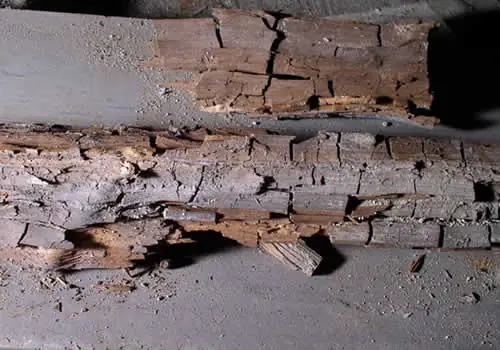
Wet rot is a general name for several fungi that attack timber with a high moisture content. It is the most common timber decay in homes, found in window frames and sills, door frames, skirting boards, floor joists against damp walls, and roof timbers beneath leaks.
Signs: timber that is dark, soft or spongy, that cracks along the grain or crumbles when dry, often with a musty smell and paint that flakes away.
Repair: fix the source of water first. Wet rot stops once the timber dries out. Badly weakened wood is cut out and replaced with treated timber; sound timber is left in place.
Dry rot
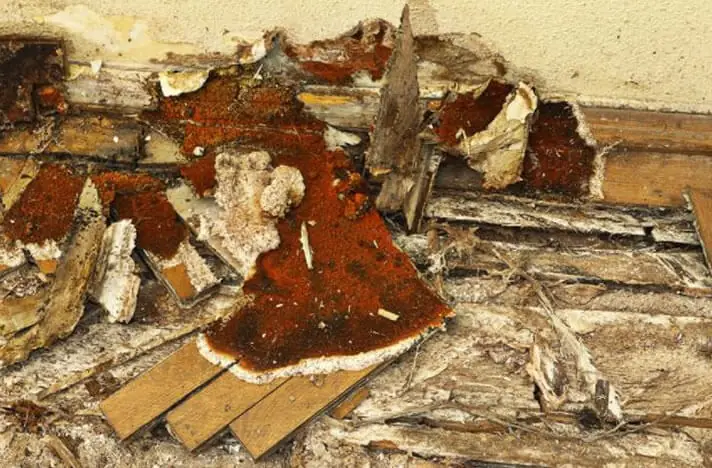
Dry rot (Serpula lacrymans) is the most serious form of timber decay in buildings. Despite the name it needs damp to start, but once established it can spread through and across brickwork, plaster and other materials to reach new timber, which is why it can travel a long way from the original source. It favours damp, still air and darkness: under floors, behind panelling, in cellars and in roof voids.
Signs: deep cracking of the wood into cube shapes, white or grey cotton-wool-like growth, grey strands that can be pencil-thick, a distinctive mushroom smell and, in advanced cases, a pancake-shaped fruiting body with rust-red spore dust.
Repair: remove the moisture source and promote drying and ventilation, cut out decayed timber with a safety margin, and replace it with treated timber. Targeted treatment may be needed where masonry is affected. Large-scale removal of plaster is less common than it used to be, but every case needs proper assessment.
Woodworm
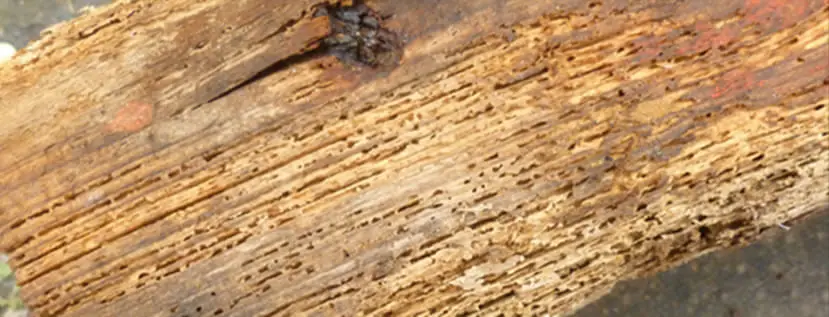
"Woodworm" is the larvae of wood-boring beetles. The larvae live inside the timber for several years, feeding and tunnelling, before emerging as adult beetles through small round exit holes. The common furniture beetle is by far the most frequent in UK homes, typically in floorboards, joists, loft timbers and old furniture. Other species, such as the deathwatch beetle in old hardwood structures, are more localised.
Signs: small round holes in the surface of the wood, fine powdery dust (frass) below them, and in serious cases weakened or crumbling timber.
Is it active? Many infestations are historic. Fresh holes have clean, light-coloured edges and there may be fresh frass. Old holes are dark and often filled with dirt or polish.
Repair: reducing the timber's moisture content often causes an infestation to die out. Where activity is confirmed, a targeted insecticide treatment of the affected timbers may be appropriate. Whole-house spraying is rarely justified.
Preventing timber decay
- Keep gutters, downpipes and roofs in good repair
- Keep air bricks clear, and don't block sub-floor ventilation when patios or extensions are built
- Fix plumbing leaks promptly, especially around baths, showers and WCs
- Keep cellars and roof voids ventilated
- Get suspicious timber checked early, as small repairs are much cheaper than big ones
Frequently asked questions
Is dry rot worse than wet rot?
Generally yes. Wet rot stays near the source of moisture and stops when the timber dries. Dry rot can spread across masonry to reach dry timber elsewhere, so it needs more extensive investigation and repair.
Can I treat woodworm myself?
Small, confirmed areas of common furniture beetle can sometimes be treated with DIY products, but it's worth confirming the infestation is active and identifying the beetle first. Many holes are historic and need no treatment at all.
Does timber rot mean the house is unsafe?
Not usually, but structural timbers such as joists, beams and lintels need to be assessed. The survey will flag any timbers that may need a structural engineer's opinion.
Not sure what you're dealing with? An independent survey will tell you, with no treatments to sell. About the homeowner survey.